It is the early 1500s and Avignon is under siege by what has become, in the last couple of centuries, an ever-present fear. The plague is back again. The people of this time would be filled with dread at the thought of a plague outbreak. There is no effective cure, or even treatment, and the mortality rate is staggeringly high.1
The waves of plague that had started back in the mid-14th century had ebbed and flowed in Europe for centuries. The resultant impacts went far beyond mortality and sickness. Society itself had experienced upheaval and reorganization. The medical establishment had lost the faith of the people.2 Enter on to this scene, a young medical student, Michel de Nostredame (later called, famously, Nostradamus). In 1529 Michel was studying medicine at the University of Montpellier. His road to medical school was not the normal trajectory. History is unclear if he even finished his degree.3 Although Nostradamus is most famous for his predictions and work on the occult, he was also known for being one of the few people who offered hope for a treatment during plague outbreaks. He developed what is called today the Rose Cure.4
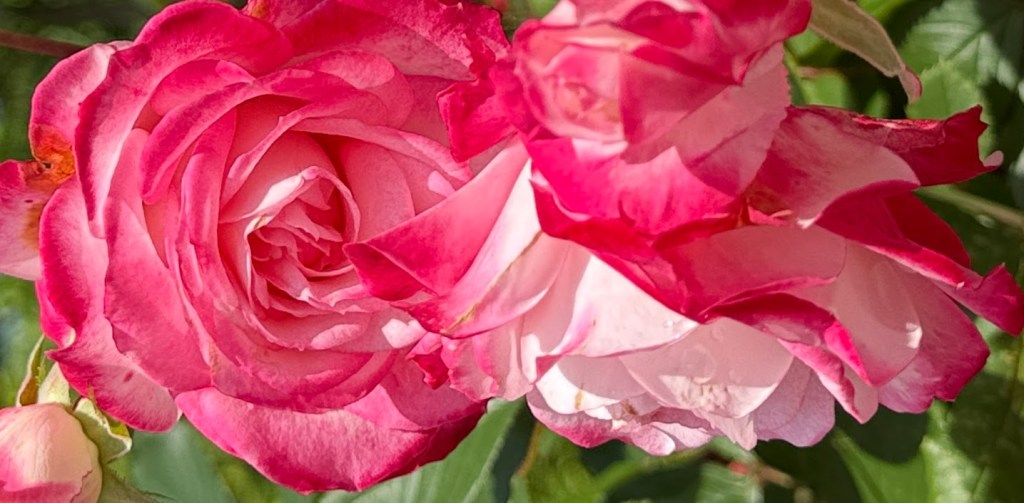
It is important to remember how deadly and contagious this disease was. People were desperate for anything that would help them survive. Michel de Nostredame was very critical of the medical establishment, perhaps lending him more credibility in the eyes of a people that had lost faith in authority. He conjured up a pill, produced by harvesting rose petals, drying them and grinding them into a fine powder. He is credited as having saved “thousands from plague in Barbonne, Carcassone, Toulouse, and Bordeaux.”5 Sadly, in another outbreak of plague, this “cure” failed. This combined with the death of his first wife and their children eventually moved him away from medicine and into prophecy.6
From a modern perspective, we may wonder why or if this worked at all. Was it mere coincidence or a type of placebo effect that accounts for the early success? It has been suggested that the success may have been less the rose pills and more attributable to his encouragement of more hygienic practices than were common at the time.7 But is there any evidence that rose petals might have some antimicrobial or immune boosting properties? To answer that question, we can turn to the 21st century and modern scientific work.
In 2011, researchers extracted and tested the petals or white, red, and yellow roses to see if they could suppress growth in bacteria and fungi. They did find that crude extracts showed a wide range of antimicrobial activity, including against gram-negative bacteria. This is significant as Yersinia pestis, the causative agent of plague, is also a gram-negative bacteria. Interesting, the color of the rose petals seemed to be related to the degree of antimicrobial activity that was observed.8 Another study in 2014 confirmed that rose petals, historically used in food and teas, had antimicrobial activity against bacteria, including gram negative cells. Additionally, they note that there was a cytotoxic effect against cervical and breast cancer cells, and antiradical properties, found in the rose petals.9
It is always interesting to look to history to see what people in the past used to treat disease. Despite not knowing about germ theory, microbes, or disease transmission in a modern sense, they made keen observations about their world and how disease spread. While the methods they used were not effective in treating the diseases of their age, their observations represent not only something of historical interest, but a possible avenue for further research into antimicrobial treatments and molecules.
- Scribd. Nostradamus. https://www.scribd.com/document/154353404/Nostradamus ↩︎
- Judson, JP (1999) Magical Moments in Medicine, Part 6: Renaissance Medicine. JUMMEC: 1. History of Medicine. file:///C:/Users/sandr/Downloads/10544.pdf ↩︎
- Blakemore, Erin (2025, July 28) Who was Nostradamus- and why do his predictions still rile us up? National Geographic. ↩︎
- Blakemore
Crouzet, D (2011) Nostradamus: A Healer of Souls in the Renaissance. Polity Press: Cambridge, UK. pg. 5-6
Judson
↩︎ - Judson, pg. 17 ↩︎
- Blakemore; Judson
↩︎ - Blakemore ↩︎
- Zhang W et al (2011) Natural resistance of rose petals to microbial attack. J Environ Sci Health B. 46(5): 381-93. ↩︎
- Nowak R et al (2014) Cytotoxic, antioxidant, antimicrobial properties and chemical composition of rose petals. J Sci Food Agric 94(3): 560-7. ↩︎

